

Bun Cha
Bún chả
IPA: /ɓun caː/ Say it like: "boon cha" Meaning: Grilled pork with rice noodles, a Hanoi specialtyHow to pronounce Bún chả
When people think of Vietnamese cuisine, pho often comes first. But in Hanoi, many locals will tell you that bun cha (bún chả) is the true lunchtime classic.
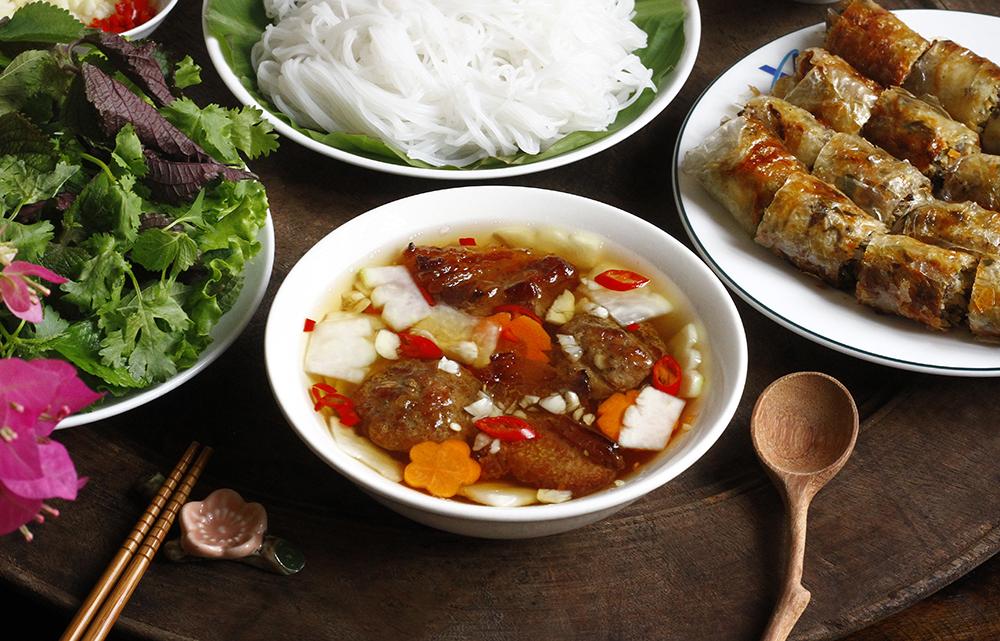 Traditional bun cha in Hanoi, Vietnam. Photo by Bui Thuy
Smoky grilled pork, soft rice noodles, fresh herbs, and a perfectly balanced dipping sauce — bun cha captures the soul of Northern Vietnamese cooking in one simple yet unforgettable meal.
What Is Bun Cha?
Bun cha is a traditional Hanoi dish consisting of:
- Charcoal-grilled pork (patties and sliced pork belly)
- Fresh rice vermicelli noodles
- A warm sweet-and-sour fish sauce dipping broth
- Pickled green papaya and carrot
- A generous plate of fresh herbs
Unlike noodle soups such as pho, bun cha is not served as one combined bowl. Instead, the noodles and herbs are separate, and the grilled pork is placed inside a bowl of dipping sauce.
The dish gained worldwide attention when former U.S. President Barack Obama enjoyed bun cha during his 2016 visit to Vietnam at Bún chả Hương Liên - now famously nicknamed “Obama Bun Cha.”
Key Ingredients That Define Authentic Bun Cha
1. Grilled pork (Cha)
Bun cha includes two types of pork:
- Pork patties (cha vien) – Ground pork seasoned with fish sauce, sugar, shallots, and black pepper.
- Sliced pork belly (cha mieng) – Thin slices of marinated pork grilled until lightly caramelized.
The meat must be grilled over charcoal. This gives bun cha its signature smoky aroma and slightly charred edges.
2. Sweet and sour dipping sauce
The dipping bowl is the heart of bun cha. It contains:
- Fish sauce
- Sugar
- Vinegar or lime juice
- Garlic and chili
- Pickled green papaya and carrot
The flavor should be balanced — mildly sweet, gently tangy, and savory without being too salty.
3. Fresh herbs and rice noodles
Soft rice vermicelli (bun) is served separately on a plate. A side of herbs - lettuce, mint, perilla, cilantro - adds freshness that balances the richness of the grilled pork.
How To Eat Bun Cha Like a Local
Eating bun cha is part of the experience:
- Pick up a portion of noodles.
- Add fresh herbs.
- Dip everything into the bowl with grilled pork.
- Adjust chili to taste.
- Sprinkle freshly ground black pepper into the dipping bowl for extra aroma and depth.
That small touch of black pepper enhances the smoky flavor of the pork and gives the sauce a more complex finish.
Traditionally, bun cha is eaten at lunchtime (around 11:00 AM to 2:00 PM). Many popular places sell out early.
Where To Eat Bun Cha in Hanoi’s Old Quarter
If you want the most authentic atmosphere, head to the Old Quarter - where charcoal smoke fills the streets and vendors grill pork right on the sidewalk.
Here are some well-known options:
1. Bún chả Đắc Kim
Address: 1 Hàng Mành, Old Quarter
Price: 60,000 – 90,000 VND
One of the most famous bun cha restaurants in central Hanoi. Expect bold flavors and a busy lunchtime crowd.
2. Bún chả Hàng Quạt
Address: 74 Hàng Quạt, Old Quarter
Price: 40,000 – 60,000 VND
A smaller, more traditional local eatery. Simple setting, authentic flavor, very affordable.
3. Bún chả 34 Hàng Than
Address: 34 Hàng Than
Price: 50,000 – 70,000 VND
Known for generous portions and tender grilled pork belly.
4. Bún chả Hương Liên
Address: 24 Lê Văn Hưu
Price: 60,000 – 100,000 VND
Not located inside the Old Quarter but internationally famous thanks to Barack Obama’s visit.
How Much Does Bun Cha Cost?
In general:
- Street-style bun cha: 40,000 – 60,000 VND
- Popular restaurants: 60,000 – 100,000 VND
- Combo meals (with spring rolls and drinks): 80,000 – 120,000 VND
For international visitors, bun cha offers outstanding value for a complete and satisfying meal.
Why Bun Cha Is a Must-Try in Hanoi
- Authentic Northern Vietnamese flavor
- Perfect balance of sweet, savory, and tangy
- Unique charcoal-grilled aroma
- Affordable and widely available
- A true local lunchtime tradition
Bun cha is more than just a dish — it’s part of Hanoi’s daily rhythm. From sizzling grills on narrow streets to small plastic stools on the sidewalk, this meal captures the essence of the city.
If you visit Hanoi and skip bun cha, you haven’t truly tasted the capital.
See also:
